5 August 20265 min read
The Smell of Besan Roasting: What Does a Slow Flame Change Inside a Laddu?
Every Maharashtrian home knows the moment. Besan meets hot ghee, and within minutes the whole house knows laddus are coming. What actually happens in that kadhai, why it cannot be hurried, and how to tell a patient laddu from a rushed one.
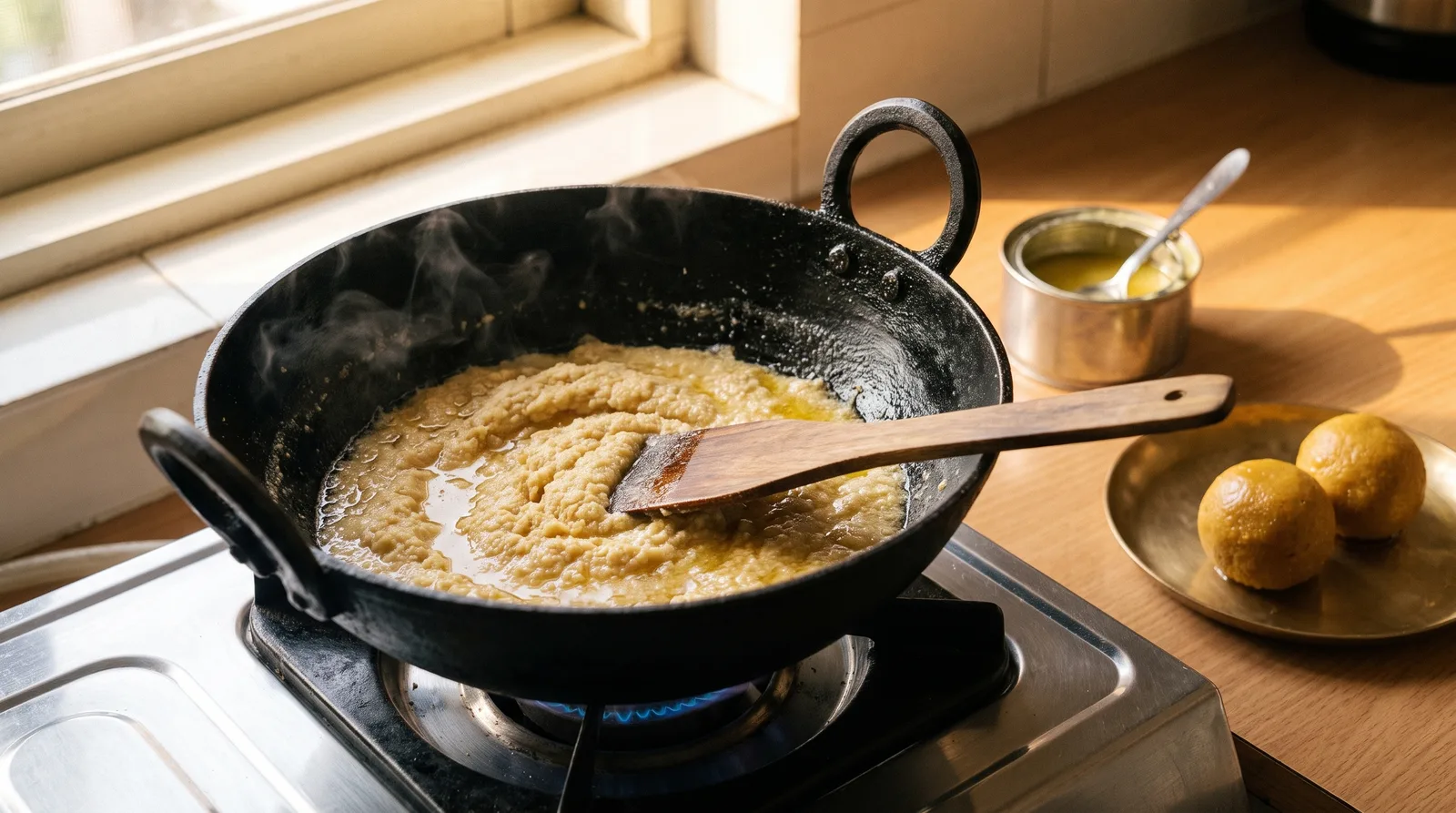
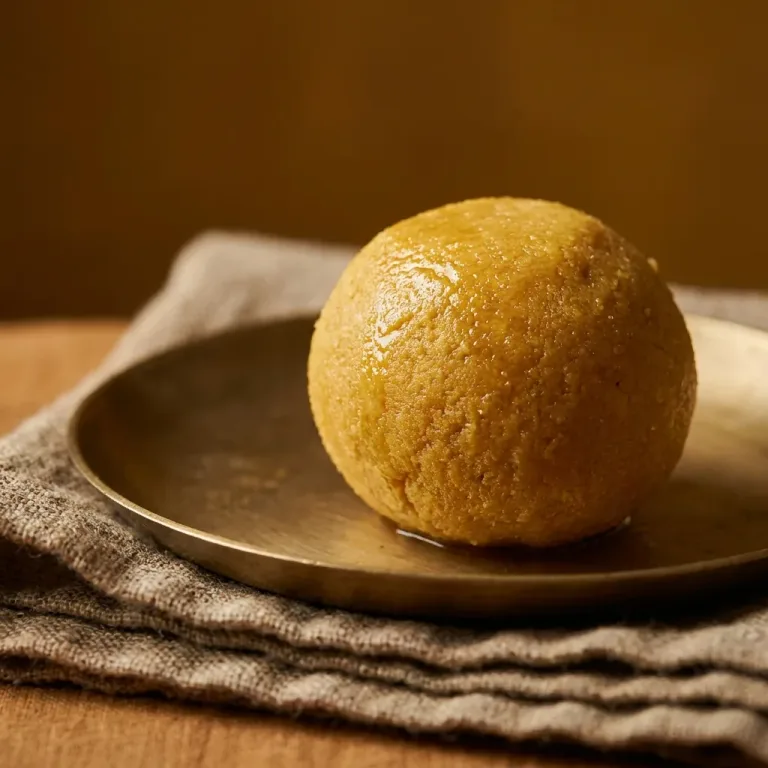
There is a moment in every Maharashtrian home that needs no announcement. Someone sets a kadhai on a low flame, drops in desi ghee, and pours in the besan. For a while, nothing. Then the aroma starts moving through the house, room by room, and everyone knows without being told: laddus are being made today. This piece is about what is actually happening in that kadhai, and why the slow flame is the whole secret.
What is the slow flame actually doing?
Raw besan has a green, unfinished edge to its taste. The only thing that removes it is time on gentle heat. As the minutes pass, the rawness leaves, the colour deepens from pale yellow towards gold, and the aroma turns from flour to something warm and nutty. The ghee is doing quiet work too, reaching every grain so the laddu later melts instead of crumbling. None of these changes can be rushed, because each one only begins when the previous one is done.
- The first minutes: nothing seems to happen. The besan stays pale, the smell is raw flour, and the stirring arm is already tired
- Midway: the colour starts to turn and the mixture loosens, flowing off the spatula like wet sand
- The turn: the aroma changes from raw flour to roasted nuttiness. This is the moment the whole house notices
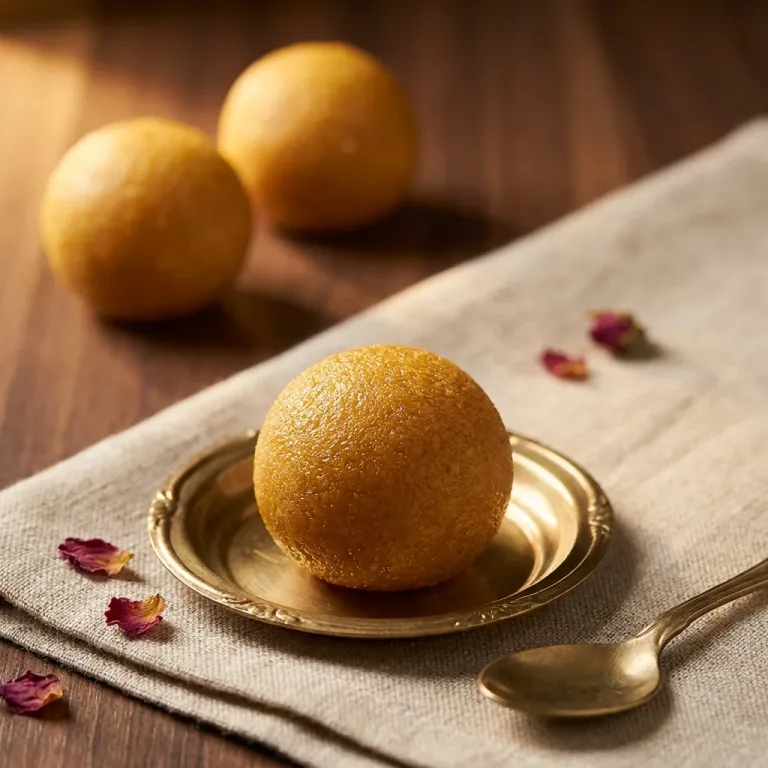
- The finish: deep gold, ghee releasing at the edges, and the mixture leaving the sides of the kadhai on its own
Why does hurrying always show?
Turn the flame up to save time and the besan browns on the outside while staying raw inside. The laddu that comes out of it looks right and tastes wrong: pale ones carry that raw edge, over-dark ones turn bitter, and there is no fixing either after the fact. The old test is simpler than any thermometer. Taste a pinch. If any rawness remains, keep stirring. The kadhai decides when it is done, not the clock.
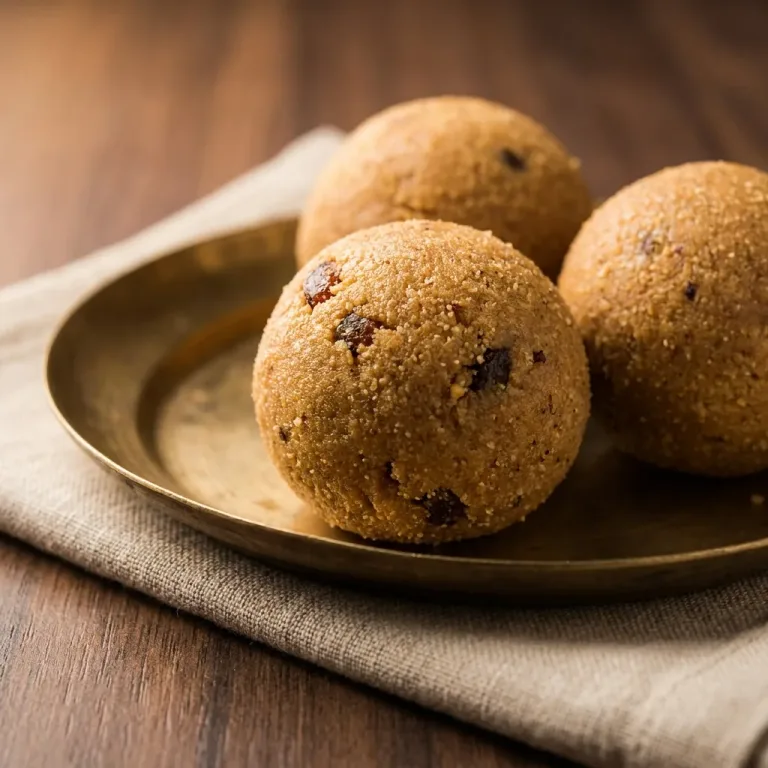
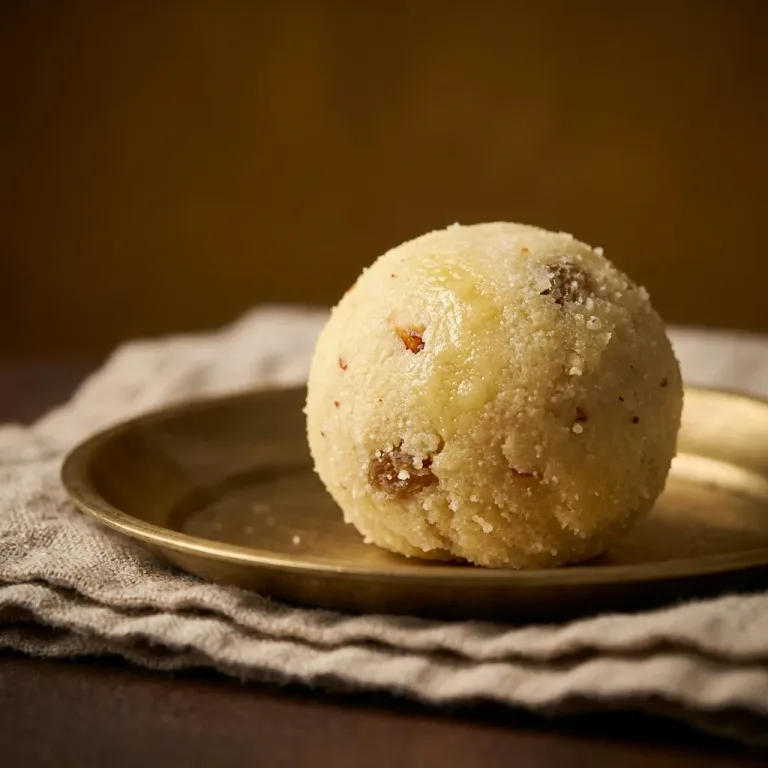
And then comes the part every child waits for: the rolling. Laddus are shaped while the mixture is still warm, because that is when the ghee binds everything softly and the sugar settles as it cools. Wait too long and the mixture stiffens; roll too hot and it will not hold. The window is short, so the whole house gets recruited, and the first slightly crooked laddu always disappears before it reaches the plate.
This is exactly how we make our besan laddu: a patient flame, desi ghee, and rolling while warm, in small batches for people whose names we know. If the laddu has a longer story in your home too, you might enjoy why laddus anchor every Maharashtrian celebration. And if this page has made the kitchen feel a little empty, WhatsApp is right there.
Frequently asked questions
Why does my besan laddu taste raw?
Almost always because the besan was roasted too fast or too little. The raw edge of gram flour only leaves on a gentle flame, with steady stirring, until the colour turns deep gold and the aroma goes from flour to roasted nuttiness.
How long does it take to roast besan for laddus?
On a properly low flame, well over half an hour for even a small home batch. But the honest answer is that the colour and aroma decide, not the clock. Taste a pinch; if any rawness remains, it is not done.
What makes a besan laddu danedar (grainy)?
Coarser-ground besan and patient roasting till the ghee starts releasing give the danedar texture many homes prize. Finely ground besan rushed through the kadhai gives a flat, pasty laddu instead.
Where can I order slow-roasted besan laddu in Pune?
Gharguti Godwa makes besan laddus in small batches in a home kitchen in Bavdhan, Pune, roasted slow in desi ghee and rolled warm. Orders are taken over WhatsApp.