5 August 20266 min read
Dink and Methi Laddus for New Mothers: Maharashtra's Baalantin Tradition
When a daughter comes home to her maher with a newborn, someone's first thought is still the same: the laddus must be made. The story of the baalantin laddu, a quiet custom of care that every Maharashtrian family recognises.
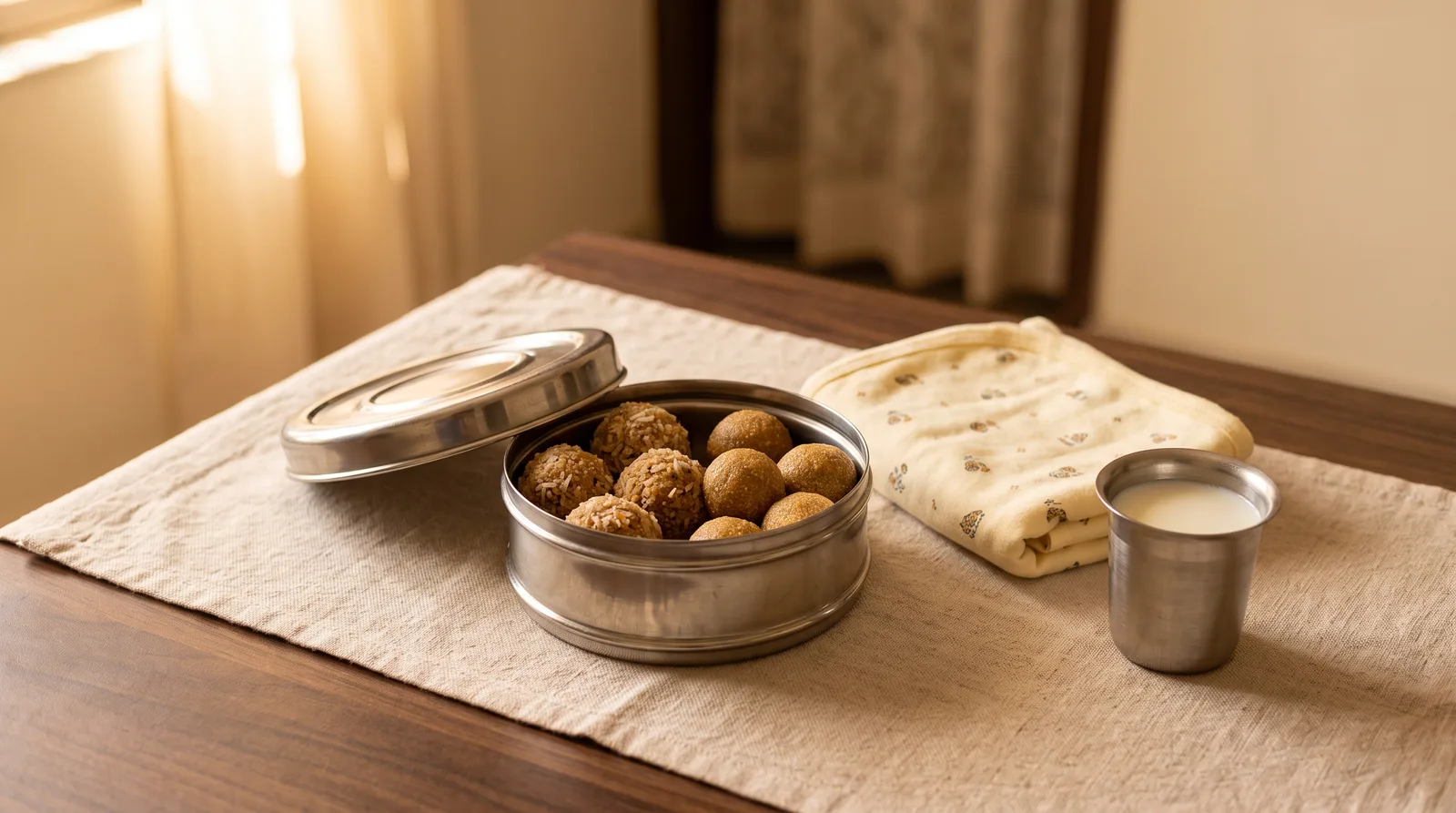
In the weeks after a baby arrives, a Maharashtrian household quietly rearranges itself around two people: the baby, and the baby's mother. And somewhere in that rearrangement, almost without discussion, a kadhai comes out. Dink is fried in ghee till it puffs. Methi is roasted till its bitterness softens. Laddus are rolled, packed into a steel dabba, and placed where the new mother will find them every morning. Nobody calls it a system. It is simply what is done.
A custom every family recognises
The tradition has a name for her: baalantin, the new mother. In many families the daughter goes to her maher for the birth, and the laddus are her mother's department, or her grandmother's. Tradition holds that the first months ask a great deal of a new mother, and the old answer to that was not a supplement bottle. It was food made with extra patience: small, rich, easy to eat with one hand while the other holds a sleeping baby.
This is not only a Maharashtrian instinct. The same pair of laddus, under different names, appears in new mothers' homes across the country, and the pair also anchors Maharashtra's winter laddu tradition. When that many kitchens, in that many languages, arrive at the same answer, you are looking at something families have trusted for a very long time.
What goes into them?
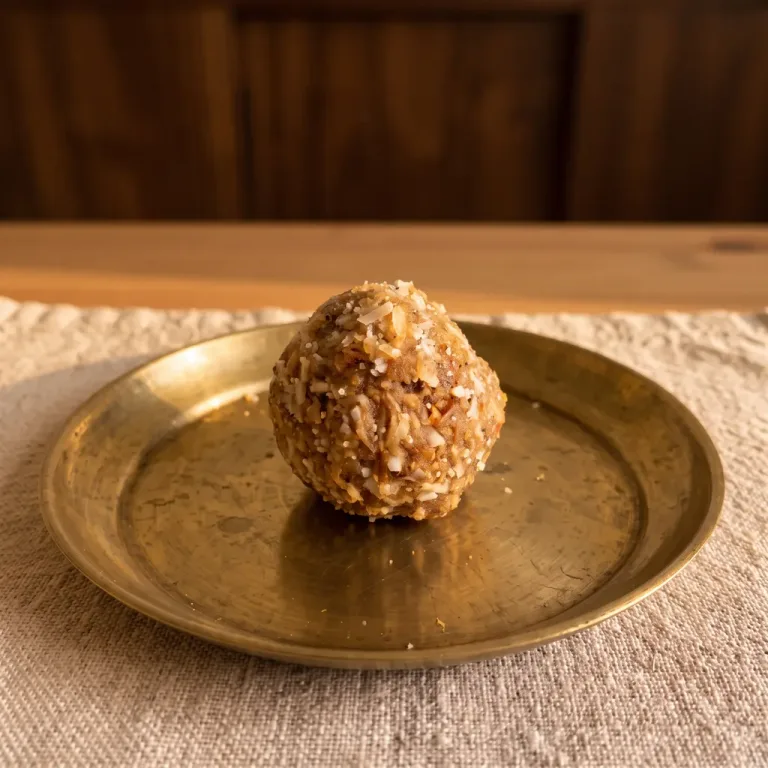
- The dink laddu: edible gum fried in desi ghee till it puffs into a light crunch, rolled with dry fruits. Rich, warming, one is enough
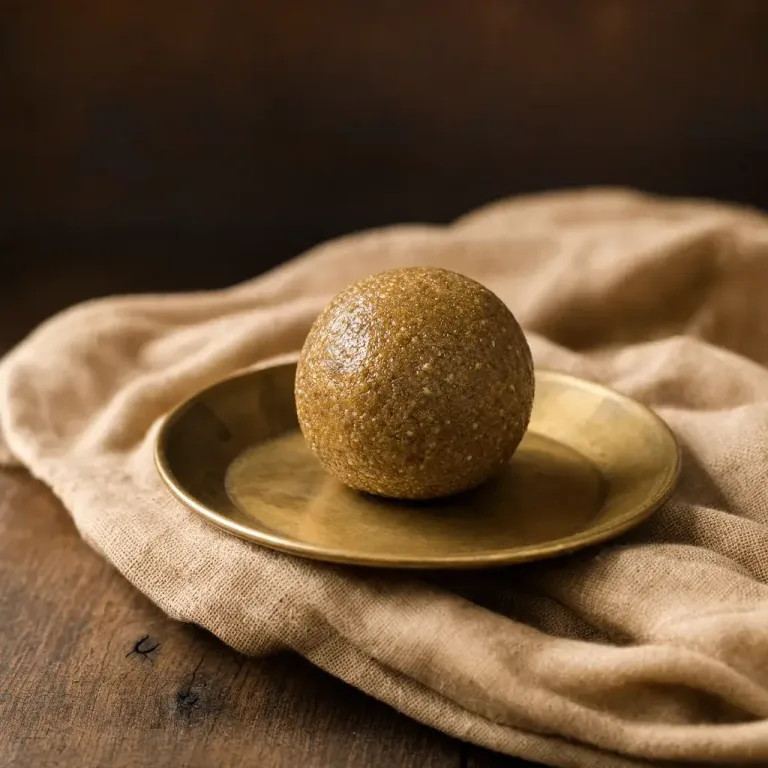
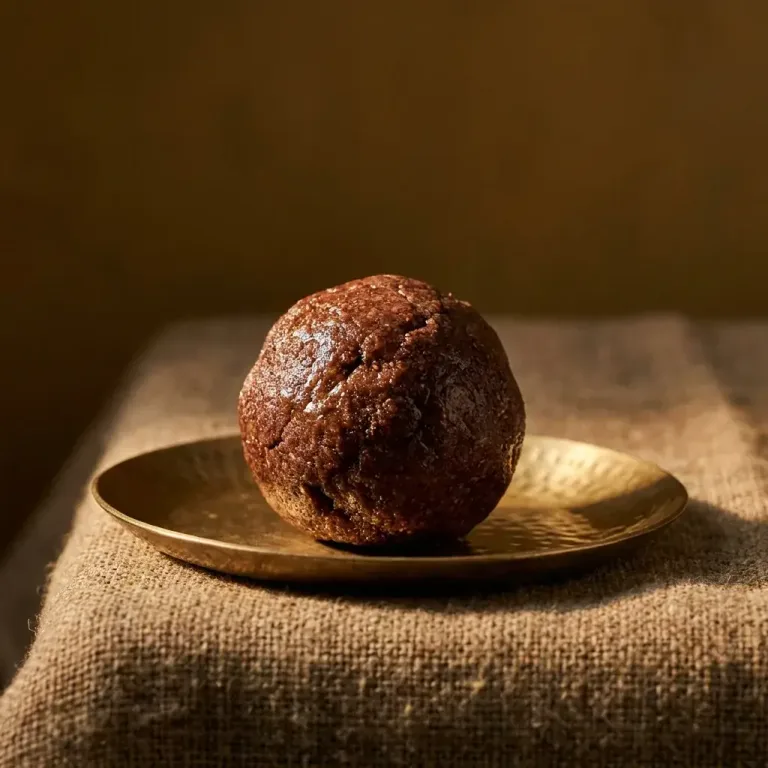
- The methi laddu: fenugreek roasted with patience, its bitterness mellowed by jaggery and ghee into a warm, earthy sweet
- Both are rolled small on purpose, the way the grandmothers sized them: not a dessert portion, a daily one
Care, not medicine
Let us say this plainly: we make laddus, not medical claims. What a new mother eats is a matter for her, her elders and her doctor, and every family finds its own balance there. What we can vouch for is the recipe itself: dink and methi laddus made the way the baalantin tradition made them, with desi ghee, jaggery and patience, in small batches. The tradition's real ingredient was never a secret anyway. It was somebody caring enough to make them.
There is one more place these laddus belong: in the bag you carry when you go to meet the baby. Flowers wilt and toys pile up, but a dabba of dink laddus, made for the mother rather than the guests, is the gift the household actually uses. If there is a new baby in your circle, tell us a few days ahead on WhatsApp and we will roll the laddus fresh, the way her aaji would have.
Frequently asked questions
Why are dink laddus given to new mothers in Maharashtra?
It is a tradition passed down for generations: rich, warming laddus made with dink fried in ghee were the food families gave a baalantin in the months after birth. We make them the traditional way and make no medical claims; what a new mother eats is for her family and doctor to decide.
What is a baalantin laddu made of?
The classic pair is the dink laddu, edible gum fried in desi ghee till it puffs, rolled with dry fruits, and the methi laddu, roasted fenugreek mellowed with jaggery and ghee. Both are traditionally rolled small, for one a day rather than a festival plate.
What should I take when visiting a new mother and baby?
A dabba of dink and methi laddus is the traditional Maharashtrian answer: a gift for the mother herself rather than the guests. Made fresh, it is also the one gift the household actually finishes.
Can I order dink and methi laddus for a new mother in Pune?
Yes. Gharguti Godwa rolls dink and methi laddus fresh to order in a home kitchen in Bavdhan, Pune, with desi ghee and jaggery. Message us a few days ahead on WhatsApp.