14 September 20265 min read
Shengdana Laddu: How Did a Nut from Brazil End Up on the Upvas Plate?
The peanut is not from here. It came across the sea on a ship, before Shivaji Maharaj was born, and walked straight into the strictest tradition we have. The story of how a foreigner became the laddu a fasting day runs on.
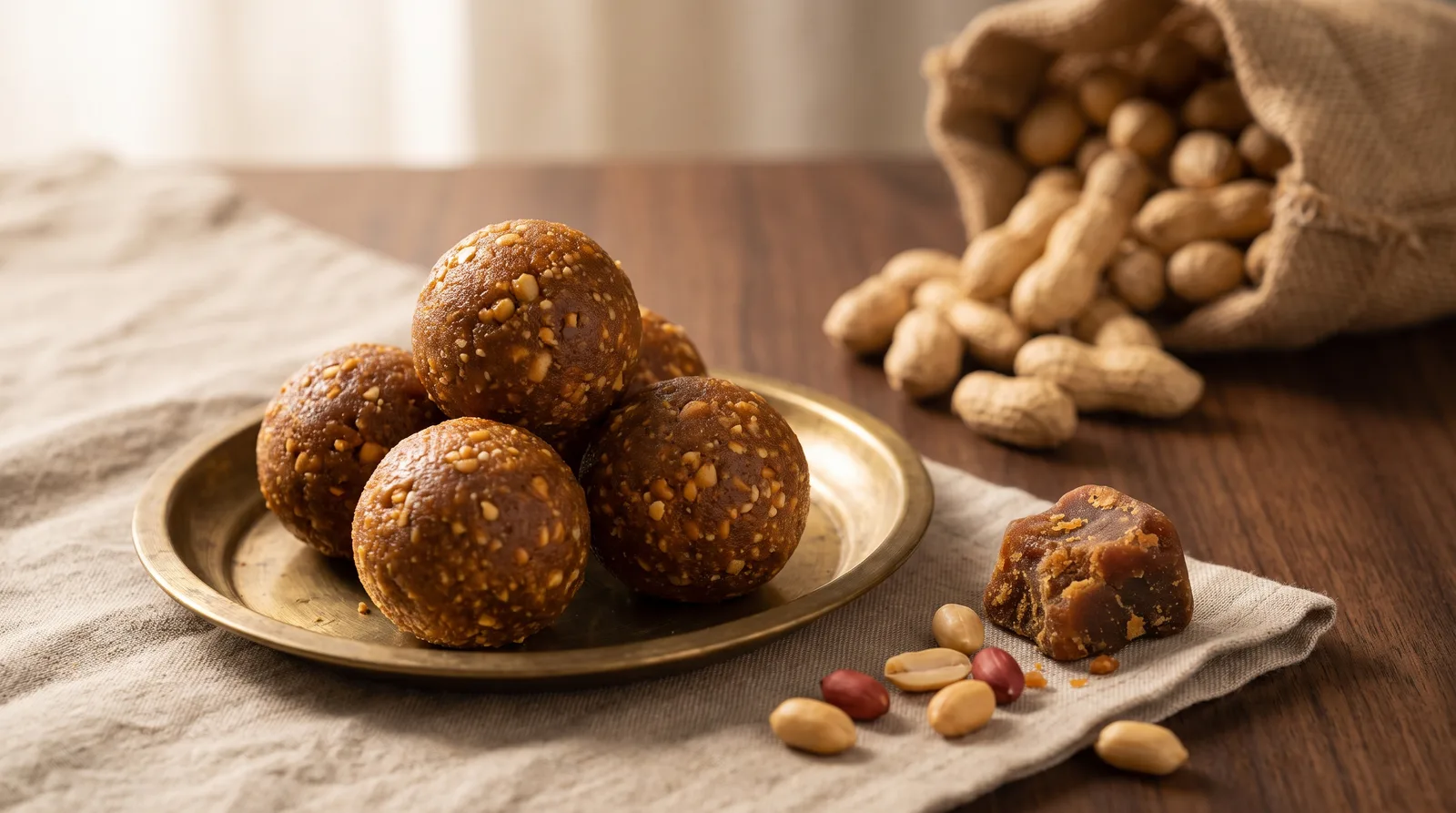
Somewhere on a Goan dock, before Shivaji Maharaj was born, a sailor tipped out a sack of nuts that grew underground. Nobody knew what to call them. Four hundred years later, a woman in Bavdhan roasts them on a Monday morning because it is Shravan and she is fasting, and nothing about that plate feels foreign to her at all.
A nut nobody had a name for
The peanut grew in Brazil. It came to this coast the way the chilli, the potato and the cashew came, in the hold of a Portuguese ship, as a curiosity, a seed somebody thought might take. It took. It liked the red soil and the long monsoon, and it did something no nut here had ever done: it grew its pods under the earth. A farmer had to dig for it, like a root. Within a few generations it had a Marathi name that says exactly that, shengdana, the seed in the pod, and by then nobody remembered the ship.
Then came the turn that makes this a story. Upvas rules are the oldest and strictest rules in a Maharashtrian kitchen. No grain, no dal, no onion, no garlic. Everything on the fasting plate has been argued over for centuries. But nobody had ever written a rule about this nut, because when the rules were written, it did not exist here. So one day a woman on an upvas day looked at a handful of roasted shengdane, decided they were not grain and not dal, and ate them. That is all it took. The strictest door in the house was simply open, and the foreigner walked in.
A plate full of strangers
Look at a Shravan Monday plate with that in mind. Sabudana khichdi: the sabudana is made from a root that came from Brazil. The potato in it came from the mountains of Peru. The green chilli came from Mexico. The peanuts crushed over the top, Brazil again. Only the ghee, the coconut, the jaggery, the varai and the fruit on the side were here first. The most traditional plate in the house is the most travelled one, and it has been that way for so long that a grandmother would laugh at you for pointing it out.
It is not a scandal, and here is why. Upvas was never about old and new. It was about lightness and restraint: eat what carries you through the day without weighing you down, and leave the rest. A handful of roasted peanuts does exactly that. The grandmothers who let it in made that judgement without a book, by the only test that matters in a kitchen: how you feel at four in the afternoon.
How it became a laddu
Peanut met jaggery almost at once. Jaggery was already here, already the way this coast sweetened everything, and it does one thing to a roasted peanut that sugar cannot: it holds it. Melt jaggery to the point where a drop in water sets hard, stir in the crushed peanuts, and you have a few minutes to shape it before it seizes. In Lonavla they pressed it flat into chikki, and the shopkeepers there still tell of feeding it to the men who cut the railway through the ghat. At home it went the other way. It was rolled into a ball while it was still hot, because a ball fits a child's fist, a steel dabba and a pocket on the way to school. The original energy ball, long before the gyms.
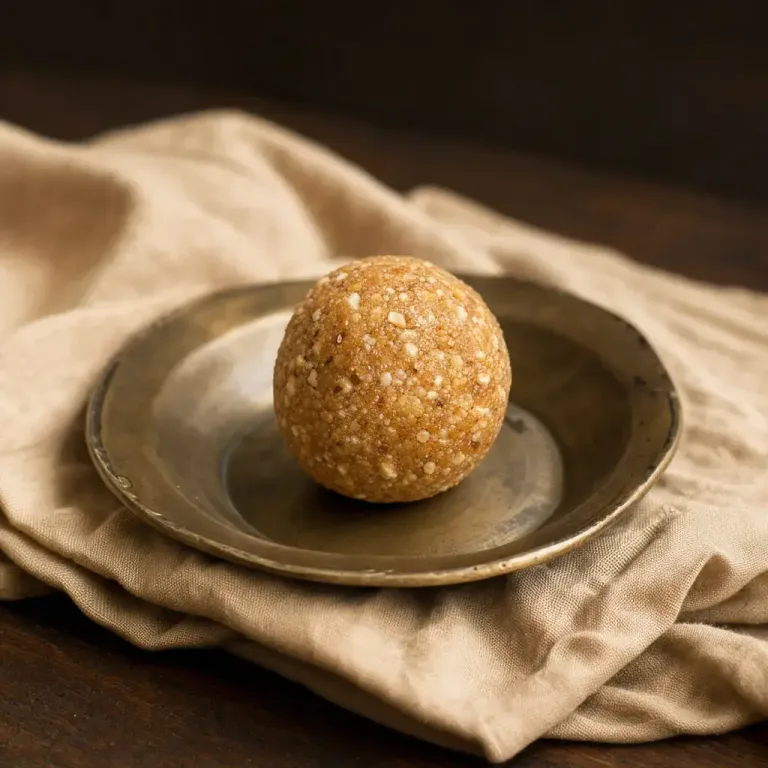
Ours is roasted peanuts and jaggery, and the time it takes to roast them properly, so the skins slip and the smell fills the house before the jaggery has even gone on the flame. Thirty days in a dabba, and rarely there that long. Back in Bavdhan, the woman from the first line has finished roasting. She is not thinking about Brazil. She is thinking that the laddus must be rolled before the mixture cools, because that is the only rule about a shengdana laddu anybody ever needed to write down. If you are wondering which laddu suits whom, that guide is here.
Frequently asked questions
Is shengdana laddu allowed on an upvas day?
In most Maharashtrian homes, yes. Peanuts and jaggery are both accepted fasting foods, which is why the laddu is a Shravan and Ekadashi favourite. Families differ, so follow your own house rule.
Where did the peanut come from originally?
South America. It reached India on Portuguese ships a few centuries ago, like the chilli, the potato and the cashew, and took to the red soils of the Konkan and the Deccan so well that it now feels native.
What is in Gharguti Godwa's shengdana laddu?
Roasted peanuts and jaggery. The peanuts are roasted slow until the skins slip off, and the laddus are rolled while the jaggery is still warm. No preservatives. In a closed dabba they keep for about 30 days.
Is shengdana laddu the same as chikki?
Same two ingredients, different shape and bite. Chikki is pressed flat and cooled until it snaps. The laddu is rolled while warm, so it stays softer to bite and easier for children and elders.